No Cap: Why I Built My Own Framework at 16
The real story behind FFramework - why a 16-year-old decided to write his own PHP framework instead of using Laravel, and what that taught me about building systems that last.

Mustafa Hasırcıoğlu
Software Engineer & Founder
November 1, 2025
8 min read

Why I Built My Own Framework at 16
Let me get this straight: I'm not here to flex or tell you some romanticized story about how I was a prodigy who built a framework that changed the world.
No cap.
I built FFramework because I was 16, broke, and Laravel felt like too much magic for what I needed to understand.
This is the real story.
The Real Problem I Was Trying to Solve
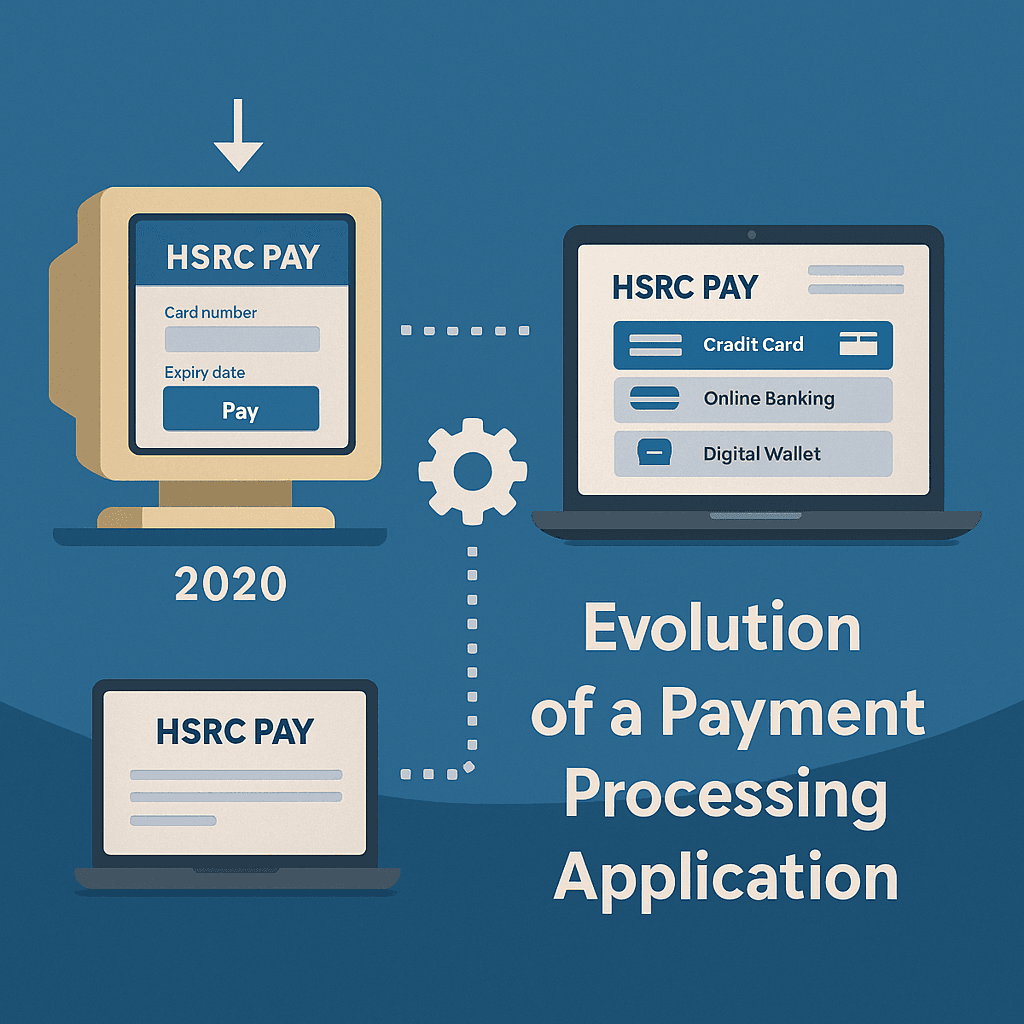
In 2020, I was building a payment gateway. Not some toy project. An actual payment gateway that had to process real money, handle 3DS, manage refunds, and not break when someone's internet connection dropped mid-transaction.
I tried Laravel first. I really did.
But here's what happened: every time I hit a wall, I'd dig into the framework's internals, and I'd realize I had no idea what was actually happening under the hood.
Routing? Magic.
Dependency injection? Magic.
ORM? Magic.
And when you're dealing with financial transactions, magic is the last thing you want.
So I did what any slightly obsessive 16-year-old would do: I started reading Laravel's source code. Then Symfony's. Then CodeIgniter's. And I thought: "I can build this. But I'll build it so I understand every single line."
What FFramework Actually Is
FFramework is a PHP framework. That's it. No revolutionary architecture. No groundbreaking patterns.
But here's what it taught me:
1. Routing Isn't Magic
// FFramework router - dead simple
class Router {
    private $routes = [];

    public function get($path, $handler) {
        $this->routes['GET'][$path] = $handler;
    }

    public function dispatch($method, $uri) {
        if (isset($this->routes[$method][$uri])) {
            return $this->routes[$method][$uri];
        }
        throw new NotFoundException();
    }
}
When you write your own router, you understand:
- Why route caching matters
- How regex patterns work in routing
- What happens when two routes conflict
- How to optimize for performance
No abstraction layer between you and the HTTP request. You see it raw.
2. Dependency Injection Is Just... Passing Arguments
// FFramework container - minimal
class Container {
    private $bindings = [];

    public function bind($abstract, $concrete) {
        $this->bindings[$abstract] = $concrete;
    }

    public function make($abstract) {
        if (isset($this->bindings[$abstract])) {
            return new $this->bindings[$abstract]();
        }
        return new $abstract();
    }
}
I didn't call it "dependency injection" back then. I just called it "not hardcoding dependencies."
When you write your own container, you understand:
- Why singletons can be dangerous
- How circular dependencies happen
- When to use factories vs direct instantiation
- The performance cost of reflection
3. Database Abstraction Forces You to Think
// FFramework query builder - no ORM magic
class QueryBuilder {
    private $table;
    private $wheres = [];

    public function where($column, $operator, $value) {
        $this->wheres[] = [$column, $operator, $value];
        return $this;
    }

    public function get() {
        $sql = "SELECT * FROM {$this->table}";
        // Build WHERE clause...
        return $this->db->query($sql);
    }
}
No Active Record. No Eloquent magic. Just you, SQL, and the responsibility to write it correctly.
This taught me:
- How prepared statements actually work
- Why N+1 queries happen
- How to optimize database queries
- When to use transactions vs when to avoid them
The Uncomfortable Truth
Building FFramework took me 6 months of nights and weekends.
In that same time, I could have:
- Learned Laravel deeply
- Built 3 different projects
- Contributed to open source
- Actually shipped something that made money
So why did I do it?
Because I was building a payment gateway, and I needed to know (not hope, not assume, but know) that every line of code was doing exactly what I thought it was doing.
When you're processing someone's money, "it probably works" isn't good enough.
What This Actually Taught Me
1. Frameworks Are Solutions to Problems You Haven't Had Yet
Laravel is incredible. But when you're 16 and building your first serious system, you haven't encountered:
- The need for 50 different middleware layers
- Complex authentication schemes
- Multi-tenant architectures
- Event broadcasting
FFramework was simple because my problems were simple. I needed:
- Routing
- Database access
- Request/response handling
- Basic security
That's it. Everything else was premature optimization.
2. Understanding > Using
I can use Laravel now. I can use Symfony, Express, Django, whatever.
But here's the difference: when something breaks, I don't just restart the server and hope it works. I know where to look. I understand the stack trace. I can debug framework-level issues.
That confidence came from building FFramework.
3. Your First System Doesn't Need to Scale to a Million Users
FFramework handled maybe 100 requests per second at peak. That's nothing by today's standards.
But it handled those 100 requests correctly. It didn't leak memory. It didn't have SQL injection vulnerabilities. It didn't crash under load.
That's the real win.
The Real Cost of Building Your Own
Let's be honest about what this cost me:
Time: 6 months I could have spent building features
Opportunity: Could have learned React, Docker, Kubernetes earlier
Isolation: Didn't contribute to open source community
Maintenance: Had to fix bugs myself, no community support
But here's what I gained:
Deep understanding of how web frameworks actually work
Confidence to debug any PHP application
Foundation that made learning other frameworks trivial
Portfolio piece that showed I could build systems from scratch
Why I'm Sharing This Now
I'm not saying you should build your own framework. You probably shouldn't.
But I am saying: if you're building something critical, understand your tools.
If you're using Laravel, read the source code. If you're using React, understand the virtual DOM. If you're using Kubernetes, understand how etcd works.
Don't just use tools. Understand them.
The Framework Today
FFramework is still on GitHub: github.com/hasirciogluhq/fframework
It's not maintained. It's not production-ready for new projects. It's a time capsule of what I knew at 16.
But it works. It processed real payments. It handled real traffic. It taught me everything I needed to know to build what I'm building now.
What I'm Building Now
Fast forward to 2025. I'm building HSRCPay, a payment gateway that's:
- Provider-agnostic (config-driven architecture)
- Type-safe (TypeScript + Zod schemas)
- Orchestrated (multi-step payment flows)
- Observable (every transaction logged and traced)
I'm not using FFramework anymore. I'm using modern tools.
But every architectural decision I make now is informed by those 6 months I spent building FFramework.
I understand why I'm choosing each tool.
I understand the tradeoffs.
I understand what happens when things break.
The Connection to Payment Systems
Here's the thing: FFramework wasn't just a learning exercise. It was the foundation for my first payment gateway.
That payment gateway, built in 2020 with FFramework, processed real money. It handled 3DS flows. It managed refunds. It worked.
And it's still working today. In production. Processing millions in real financial volume each year across multiple merchants who self-host the system independently.
Yeah, I built that.
But it had limits:
- Hardcoded provider integrations
- No abstraction layer
- Manual error handling
- Limited scalability
That's why I'm rebuilding it now.
The new HSRCPay uses everything I learned from FFramework, but applied to a modern architecture:
- Config-driven provider system
- Type-safe TypeScript
- Modular, composable components
- Intelligent error classification
- Multi-step orchestration engine
Same vision. Better foundation.
The Bottom Line
Building FFramework wasn't the smart move. It was the necessary move for me at that time.
I needed to understand how systems work from the ground up. I needed to see the code that handles HTTP requests, manages database connections, and processes business logic.
No abstraction layers. No magic. Just code.
And that foundation (that deep understanding of how web applications actually work) is what lets me build complex systems now with confidence.
What This Means for You
You don't need to build your own framework. But you should:
- Read the source code of the frameworks you use
- Understand the fundamentals before you reach for abstractions
- Build simple versions of complex systems to understand them
- Question the magic when something breaks
The goal isn't to build everything from scratch.
The goal is to understand what you're building on top of.
Final Thought
I'm 21 now. I've been building systems for 5 years.
And I still think about those 6 months I spent building FFramework. Not because it was the best framework ever built, but because it was the moment I stopped being a user of tools and started being a builder of systems.
That shift changes everything.
Want to see the code? Check out FFramework on GitHub. It's not pretty, but it's honest.
Questions about building systems from scratch? Let's talk.