Five Years Later, I'm Still Building the Same Thing
I built HSRCPay in 2020. I'm rebuilding it in 2025. Same vision, completely different execution. Here's what five years of never giving up looks like.

Mustafa Hasırcıoğlu
Software Engineer & Founder
November 5, 2025
12 min read
Five Years Later, I'm Still Building the Same Thing
Let me be honest with you.
I built HSRCPay in 2020. I'm rebuilding it in 2025.
Same vision. Same mission. Completely different execution.
Five years. Same project. Still not "done."
Some people would call that failure. I call it delusional persistence. And I'm proud of it.
The Quote That Defines Me
On my website, I wrote this:
"I failed 20 times. I will fail the 21st. But on the 22nd try, I will succeed. And when that happens... start running. I won't chase you. You'll come back around... to where I am."
That's not motivational bullshit. That's my reality.
I'm 21. I've been building payment systems for 5 years. I've pivoted, failed, rebuilt, and learned. But I never stopped.
Non-stop forward. That's the only way I know how to operate.
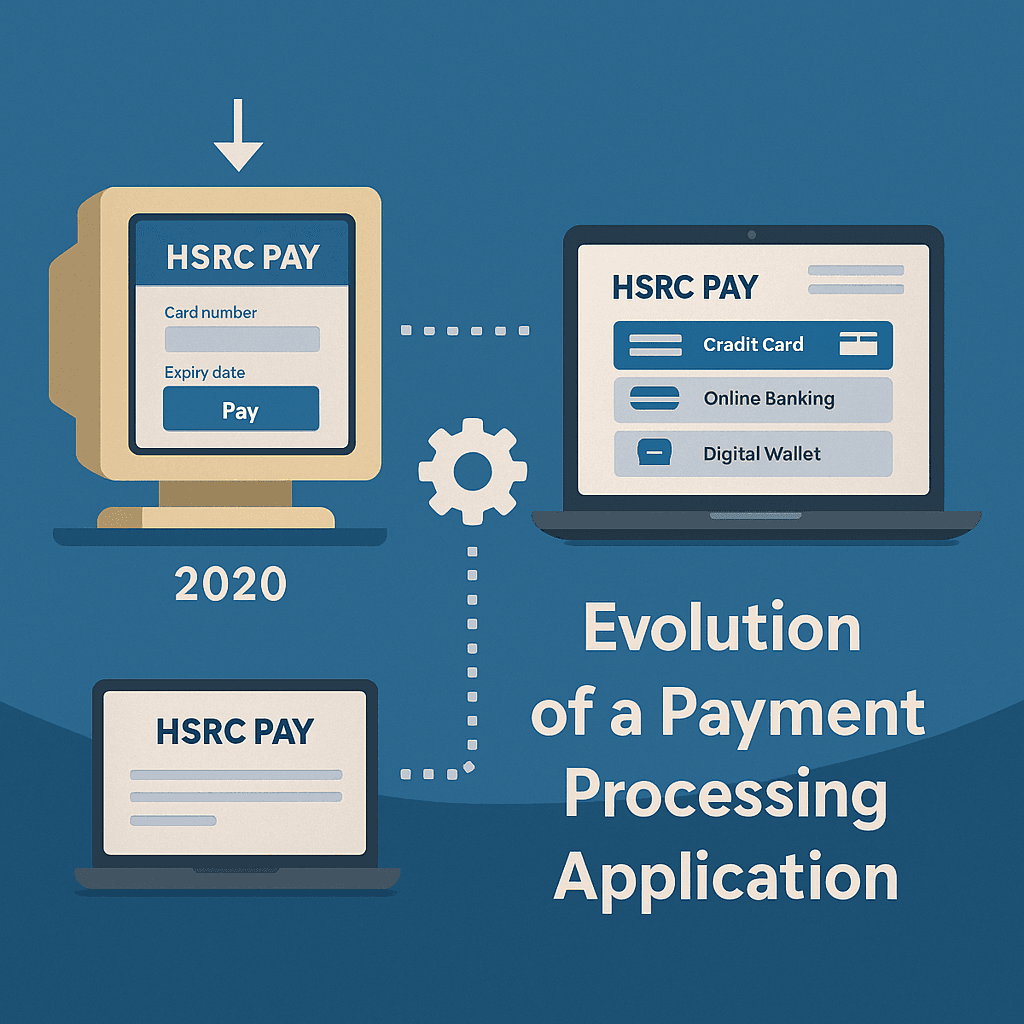
2020: The First Version
Let me show you what I built in 2020. It was... functional. It worked. It processed real payments. But looking at it now, it's like comparing a bicycle to a Formula 1 car.
The Old Code
Here's how I handled payment gates in 2020:
class GatesController extends FFDatabase
{
    public function getGate($gate_id){
        $res = FFDatabase::cfun()
            ->select("payment_gates")
            ->where("gate_id", $gate_id)
            ->run()
            ->get();

        if ($res == "no-result"){
            return false;
        }else if($res == false)
            return false;
        else
            return $res;
    }
}
It worked. It processed payments. But it was:
- Hardcoded database queries
- No type safety
- No error handling strategy
- No provider abstraction
- Just... make it work
The Payment Flow
Here's how I handled 3DS payments back then:
class DENIZBankPayment
{
    public function create_pay($order_id, $price, $currency_unit,
                              $ccname, $ccnumber, $ccyear, $ccmonth, $cccvv)
    {
        $shopCode = $result["test_mode"] ? "3123" : $result2->shop_code;
        $purchaseAmount = $price;
        $orderId = $order_id;

        // Build hash manually
        $hashstr = $shopCode . $orderId . $purchaseAmount .
                   $okUrl . $failUrl . $txnType . $installmentCount .
                   $rnd . $merchantPass;
        $hash = base64_encode(pack('H*',sha1($hashstr)));

        // Render HTML form and auto-submit
        ?>
        <form method="post" action="<?php echo $result["test_mode"]
            ? "https://test.inter-vpos.com.tr/mpi/Default.aspx"
            : "https://inter-vpos.com.tr/mpi/Default.aspx"; ?>">
            <input type="text" name="Pan" value="<?php echo $ccnumber; ?>">
            <!-- ... more fields ... -->
        </form>
        <script>document.getElementById("submit_button").click();</script>
        <?php
    }
}
It worked. Real payments went through. Real money was processed.
But every bank integration was:
- Hardcoded
- Manual
- No abstraction
- Copy-paste for each provider
- No error mapping
- No retry logic
I was 16. I didn't know better. I just made it work.
And you know what? That old version is still running today. In production. Processing millions in real financial volume each year across multiple merchants who self-host the system.
I don't have full telemetry (they run it independently), but I see enough to know this:
Something I built at 16 still moves real money, reliably.
The fact that code I wrote with all its limitations is still handling real transactions 5 years later? That's wild. But it also shows why I'm rebuilding it. Those merchants deserve better. They deserve the architecture I know how to build now.
2025: The Rebuild
Now look at what I'm building today.
The New Architecture
export class BasePaymentProviderAdapter
  implements IGatewayPaymentProviderAdapter
{
  private configParser: ConfigurationParser;
  private mappingUtils: MappingUtilities;
  private authManager: AuthManager;
  private currencyConverter: CurrencyConverter;
  private requestHandler: RequestHandler;

  constructor(configContentsAsString: string) {
    const config = parseConfig(configContentsAsString) as TProviderConfig;
    this.providerConfig = config;

    // Modular, composable components
    this.configParser = new ConfigurationParser();
    this.mappingUtils = new MappingUtilities(config);
    this.authManager = new AuthManager(this.mappingUtils);
    this.currencyConverter = new CurrencyConverter(config);
    this.requestHandler = new RequestHandler(
      this.mappingUtils,
      this.authManager,
      this.currencyConverter,
      config
    );
  }
}
Every provider is configured via configuration files. No hardcoding. No copy-paste.
The Flow Engine
async pay(params: TPaymentProviderPayParams): Promise<TPaymentProviderPayResponse> {
  if (params.threeDS === true || params.threeDS === undefined) {
    return await this.payWith3DS(params, dryRun);
  } else {
    return await this.payNonSecure(params, dryRun);
  }
}

private async payWith3DS(params: TPaymentProviderPayParams): Promise<TPaymentProviderPayResponse> {
  const endpointConfig = this.providerConfig.endpoints[endpointName];

  const flowResult = await this.requestHandler.makeEndpointRequest(
    endpointConfig,
    rootData,
    dryRun
  );

  // Intelligent error classification
  const errorInfo = this._classifyFlowError(failedStep.response, failedStep.step);

  // Automatic retry logic
  // Multi-provider failover
  // Flow condition evaluation
}
Type-safe. Modular. Testable. Scalable.
Same functionality. Different universe of quality.
Configuration-Driven Architecture
Instead of hardcoding each bank, I define everything in configuration:
provider:
  id: "qnb_finansbank"
  name: "QNB Finansbank"
  type: "bank"

actionMapping:
  payNonSecure: "payNonSecure"
  capture: "capture"

endpoints:
  payNonSecure:
    - id: "payNonSecure"
      path: "{{variables.baseUrl}}/api/v1/authorize"
      method: "POST"
      authentication:
        type: "token"
        tokenAlgorithm: "hmac-sha1"
        tokenFields:
          - "credentials.username"
          - "orderId"
          - "amount"

      flowConditions:
        success:
          - field: "payNonSecure.mapped.response.errCode"
            operator: "not_exists"
        failed:
          - field: "payNonSecure.mapped.response.errCode"
            operator: "in"
            values: ["E01", "D01"]
Add a new bank? Write a configuration file. No code changes. No deployment. Just configuration.
What Changed in Five Years
1. From Hardcoded to Configurable
2020: Every bank integration was a separate PHP file with hardcoded logic.
2025: Every bank is a configuration file. The engine handles them all uniformly.
2. From "Make It Work" to "Make It Right"
2020:
if ($res == "no-result"){
    return false;
}else if($res == false)
    return false;
else
    return $res;
2025:
async pay(params: TPaymentProviderPayParams): Promise<TPaymentProviderPayResponse> {
  // Type-safe params
  // Comprehensive error handling
  // Retry logic with exponential backoff
  // Multi-provider failover
  // Flow condition evaluation
  // Intelligent error classification
}
3. From Manual to Orchestrated
2020: Each payment step was manual. If 3DS failed, you manually handled it.
2025: Multi-step orchestration with automatic retries, failover, and error classification.
4. From "It Works" to "It Scales"
2020: Handled ~100 requests/second. That was enough.
2025: Built for thousands of requests per second, with proper queuing, caching, and horizontal scaling.
The Hard Truth About Learning
Here's the thing nobody tells you: learning takes time.
I spent 3 months trying to understand Kubernetes PVC and PV.
Three. Months.
I kept asking: "Why do we need both? If PV is the real object, why does PVC exist?"
I read documentation. I watched videos. I tried examples. Nothing clicked.
Then one day, it did.
PVC is the virtual object. PV is the real storage. PVC binds to PV.
Like a band-aid. Simple once you get it. But it took me 3 months to understand.
And that's okay.
Because once I understood it, I didn't just use Kubernetes. I designed multi-datacenter architectures with it. I built overlay networks. I set up Rook + CephFS for distributed storage.
Deep learning takes time. But it lasts forever.
And that deep understanding didn't just stay in theory. I built real-time social platforms, game servers, and e-commerce systems.
Some projects succeeded. Some failed. Some are still being built. But each one taught me something. Each failure refined my approach. Each success validated the path.
Why I'm Still Building the Same Thing
People ask: "Why are you rebuilding something you already built?"
Because I learned.
I learned:
- How to build systems that scale
- How to abstract complexity
- How to handle errors intelligently
- How to make systems maintainable
- How to think about architecture
The 2020 version worked. But it was a dead end.
The 2025 version is a foundation. It's built to grow. It's built to last.
The Reality of Being 21
I'm 21. I see stories everywhere:
"16-year-old builds app, buys Ferrari."
"19-year-old raises $10M."
"20-year-old exits for $50M."
Meanwhile, I'm here:
- Building the same payment gateway for 5 years
- Running multiple production projects (some active, some in beta, some in pre-launch)
- Still optimizing production Kubernetes setups
- Still scaling the new version
But here's the thing: the old version? It's processing millions in real financial volume per year. Multiple production merchants are running it on their own infrastructure. They're self-hosted, so I don't see everything, but I see enough to know it's working.
And beyond HSRCPay, I've built other products. E-commerce systems. Social platform. Gaming infrastructure. Some succeeded. Some are still being built. Each project taught me something. Each one validated different parts of my approach.
I've made money from these projects (media management, consulting, various services). I've crossed my first million in total revenue. I have steady monthly income. But the new HSRCPay version? That's a different story. I'm still building toward the first 100K₺ from the new architecture.
I grew up late. I didn't see the world. I didn't have mentors. I didn't have connections.
I just had code. And persistence.
And that code is still running, processing real money, 5 years later.
And that's enough.
The Big Vision vs Small Steps
I think too big. That's my problem.
I want to build:
- A data center
- An AI compute environment
- A global payment infrastructure
- Multi-datacenter orchestration
But I'm missing the bigger wins:
- Getting the new HSRCPay to its first 100K₺
- Scaling the new architecture to real revenue
- Building the infrastructure foundation
- Creating the systems that will last decades
I've made money from other projects. I have steady income. But the new HSRCPay needs to prove itself. It needs to generate its own revenue, validate the new architecture, and show that this approach scales.
Now I need to scale the new version. Make it profitable. Make it self-sustaining. Then build the infrastructure. Then build the AI engine. Then build the data center.
I'm turning 22 soon. The foundation is solid. The approach works (the old version proves that). Now the new version needs to earn its first 100K₺.
The real work begins now.
What Five Years Taught Me
1. Never Give Up (But Know When to Pivot)
I didn't give up on HSRCPay. But I pivoted how I build it.
Same vision. Different execution. That's the difference.
2. Deep Learning > Fast Learning
I learn slowly. But when I learn, I understand.
That deep Kubernetes understanding? It let me design multi-datacenter systems I couldn't have imagined before.
3. Code Quality Matters
The 2020 version worked. But I can't extend it. I can't scale it. I can't maintain it.
The 2025 version? I can build anything on top of it.
4. Persistence > Talent
I'm not the smartest engineer. I'm not the fastest learner.
But I don't stop. And that's my advantage.
The Code Evolution
Let me show you the difference:
2020: Payment Request Creation
$result = FFDatabase::cfun()->insert("payment_requests", [
    ["price", $_POST["price"]],
    ["currency_unit", $_POST["currency_unit"]],
    ["ip_address", $_SERVER["REMOTE_ADDR"]],
    ["payment_type", "bank"],
    ["bank_id", $_POST["gate_bank_id"]],
    ["owner_user_id", AuthController::getUserID()]
])->run();

Router::Route($return_callback);
Direct database insert. No validation. No error handling. Just... make it work.
2025: Payment Processing
async pay(params: TPaymentProviderPayParams): Promise<TPaymentProviderPayResponse> {
  // Validate input with Zod schemas
  // Check idempotency
  // Route to correct provider based on configuration
  // Execute multi-step flow
  // Handle errors intelligently
  // Retry with exponential backoff
  // Failover to backup provider
  // Return type-safe response
}
Every edge case handled. Every error classified. Every failure mode considered.
The Orchestration Engine
The new version doesn't just make API calls. It orchestrates:
endpoints:
  payNonSecure:
    - id: "payNonSecure"
      # Step 1: Authorize
    - id: "payNonSecureCapture"
      # Step 2: Capture (if step 1 succeeds)

flowConditions:
  success:
    - field: "payNonSecure.mapped.response.errCode"
      operator: "not_exists"
  failed:
    - field: "payNonSecure.mapped.response.errCode"
      operator: "in"
      values: ["E01", "D01"]
Multi-step flows. Conditional execution. Error mapping. Automatic retries.
This is what 5 years of learning looks like.
The Error Classification System
The old version: if it fails, it fails.
The new version: intelligent error classification:
private _classifyFlowError(response: any, step: number): {
  errorCode: string;
  isRetryable: boolean;
  shouldDecline: boolean;
} {
  // HTTP status based
  if (response.status >= 500) {
    return { errorCode: "service_unavailable", isRetryable: true, shouldDecline: false };
  }

  // Content based
  if (combinedMessage.includes("timeout")) {
    return { errorCode: "timeout", isRetryable: true, shouldDecline: false };
  }

  // Business logic
  if (combinedMessage.includes("insufficient")) {
    return { errorCode: "declined", isRetryable: false, shouldDecline: true };
  }
}
Know when to retry. Know when to failover. Know when to decline.
This is what 5 years of debugging production systems teaches you.
Why I'm Not Done Yet
I'm close. But I'm not done.
The architecture is solid. The code is clean. The system is extensible.
But I need:
- More provider integrations
- More test coverage
- More documentation
- More customers
But I'm not stopping.
I've been building this for 5 years. What's another 5?
The Mindset
"I failed 20 times. I will fail the 21st. But on the 22nd try, I will succeed."
That's not just a quote. That's my reality.
I've failed. I've pivoted. I've rebuilt.
But I never stopped.
And now? I'm closer than ever.
The code is better. The architecture is cleaner. The vision is clearer.
I'm ready.
What's Next
I'm turning 22. I've made money from other projects. I've crossed my first million in total revenue. I have steady monthly income.
But the new HSRCPay version? That's the real challenge. I need to:
- Get the new architecture to its first 100K₺
- Prove the config-driven approach scales
- Show that the modern foundation can generate real revenue
Then I'll build:
- The data center
- The AI engine
- The global infrastructure
- The systems that will scale beyond my wildest dreams
But first: make the new version profitable. Then: make it legendary.
The Bottom Line
Five years ago, I built a payment gateway.
Today, I'm building it again.
Same vision. Better execution.
Same persistence. More experience.
Same delusion. Closer to reality.
I'm 21. I've been building this for 5 years. I'm not done yet.
But I'm close.
And when I'm done? Start running.
Because I won't chase you. You'll come back around... to where I am.
Want to see the code? Check out HSRCPay and FFramework.
Questions about building systems that last? Let's talk.